
Yes. You can face a DWI charge in Texas even when police find you in a parked car. Under Texas Penal Code Section 49.04, the State must prove that you were intoxicated while operating a motor vehicle in a public place. The vehicle does not have to be moving when an officer arrives for operation to become an issue.
In a Galveston parked-car DWI investigation, details such as whether the engine was running, where the keys were located, where the vehicle was parked, what you told the officer, and whether video or witnesses show recent driving can affect the case. The timing of any drinking or drug use can also matter because the State must connect intoxication to the time of alleged operation.
Zendeh Del & Associates PLLC helps people facing DWI allegations review the evidence and determine what the State can actually prove.
Awards & Media Appearances



















Can a Parked Car Lead to a DWI Charge in Texas? 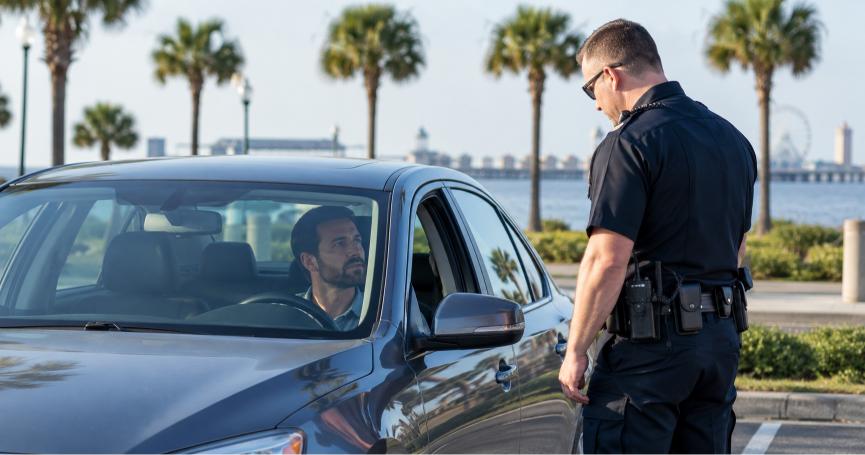
Yes. A parked car can lead to a DWI charge in Texas. Texas Penal Code Section 49.04 makes it an offense to be intoxicated while operating a motor vehicle in a public place. Texas Penal Code Section 49.01 defines intoxication as either:
- Not having the normal use of mental or physical faculties because of alcohol, a controlled substance, a drug, a dangerous drug, a combination of those substances, or another substance introduced into the body
- Having an alcohol concentration of 0.08 or more
Section 49.04 does not define the word “operating.” Texas courts consider the totality of the circumstances and look for evidence that a person took action affecting the functioning of the vehicle in a way that enabled its use.
A parked vehicle does not automatically defeat a DWI allegation. Being inside a parked vehicle also does not automatically establish DWI. The facts must support operation, intoxication, and the public-place requirement.
Texas Penal Code Chapter 49:
https://tcss.legis.texas.gov/resources/PE/htm/PE.49.htm
For a broader overview of DWI charges and defense issues in Galveston, visit:
https://www.galvestonjustice.com/galveston-dwi-lawyers/
The Zendeh Del & Associates, PLLC Team








What Does “Operating” a Vehicle Mean in a Parked-Car DWI Case?
In a parked-car DWI case, a prosecutor can try to prove operating through direct or circumstantial evidence. Police do not need to personally see the vehicle moving if other evidence supports a reasonable inference that you operated it.
Facts that can become relevant include:
- Whether you were in the driver’s seat
- Whether the engine was running
- Whether the transmission was in park, drive, or another gear
- Whether your foot was on the brake
- Whether headlights, climate controls, or other vehicle systems were activated
- Whether the vehicle was stopped in a travel lane, shoulder, driveway, parking space, or another location
- Whether a witness saw you drive
- Whether security, traffic, dash-camera, or other video shows the vehicle moving
- Whether you admitted driving shortly before police arrived
- Whether anyone else was present who could have driven the vehicle
- Whether evidence shows when the vehicle arrived at the location
No single fact decides every case.
The Texas Court of Criminal Appeals addressed this issue in Murray v. State, 457 S.W.3d 446 (Tex. Crim. App. 2015). An intermediate appellate court had previously found the evidence insufficient, but the Court of Criminal Appeals reversed that decision. The court held that the evidence was legally sufficient for a rational factfinder to infer operation based on the circumstances, including that Murray was alone and asleep in the driver’s seat of a running vehicle, appeared intoxicated when awakened, admitted drinking, and had no alcoholic beverages or containers nearby.
The final Murray decision shows why a parked-car DWI case must be evaluated on the full record rather than on one fact, such as whether the engine was running.
A parked vehicle does not automatically prove or defeat a Texas DWI case. Operation, intoxication, location, and timing still matter.
Case Results
Does It Matter Where the Car Is Parked?
Yes. Where the car is parked can matter because Section 49.04 requires operation in a public place.
Texas Penal Code Section 1.07 defines a public place as a place to which the public or a substantial group of the public has access. The definition includes streets, highways, and common areas of schools, hospitals, apartment houses, office buildings, transportation facilities, and shops.
Private ownership does not automatically make a location private for DWI purposes. A parking lot owned by a restaurant, hotel, store, apartment complex, or entertainment venue can qualify as a public place when the public or a substantial group of the public has access.
A lawyer can examine whether the vehicle was located:
- On a public street or highway
- On a shoulder or other area connected to a public roadway
- In a business parking lot open to customers
- In an apartment or hotel parking area
- In a restricted lot or gated area
- On private property that was not generally accessible to the public
The exact location and the level of public access can affect how the public-place element is analyzed.
Texas Penal Code Section 1.07:
https://tcss.legis.texas.gov/resources/PE/htm/PE.1.htm
What Happens When Police Find You in a Parked Car?
A parked-car DWI investigation can begin when an officer sees a vehicle in an unusual location, receives a witness report, responds to a crash, or checks on someone who appears asleep or unresponsive.
An officer may ask who drove the vehicle, when it was parked, where the keys are located, whether you consumed alcohol or drugs, and when any consumption occurred. The officer may also document observations such as odor, eye appearance, speech, balance, confusion, open containers, or difficulty following instructions.
The legal character of the encounter can change as events develop. A lawyer can examine when an officer approached the vehicle, when any detention began, and whether the officer had a lawful basis for each stage of the encounter.
If the encounter develops into a DWI investigation, the officer may request field sobriety tests. After an arrest, the officer may also request a breath or blood specimen. The legality and reliability of those steps can become part of the defense review.
Police video can be especially useful in a parked-car case because it can show:
- The position of the vehicle
- Whether the engine or lights appeared to be on
- Where you were seated
- What the officer asked
- What you answered
- Your appearance and movements
- What field sobriety testing occurred
- Whether the written report matches the recorded encounter
For more information about DWI stops, arrests, and rights in Galveston County, visit:
What Evidence Can Matter in a Parked-Car DWI Case?
Evidence in a parked-car DWI case often centers on timing. The State must connect alleged intoxication to the time you allegedly operated the vehicle.
If police arrive after the vehicle has been parked for some time, questions can arise about when you last drove, when you consumed alcohol or another substance, and whether the evidence establishes intoxication during operation.
Evidence worth preserving or reviewing can include:
- Body-camera video
- Dash-camera video
- Parking-lot or business surveillance footage
- Traffic-camera footage when available
- 911 recordings
- Dispatch records
- Witness statements
- Vehicle location and condition
- Key location
- Transmission position
- Receipts showing arrival or purchase times
- Hotel records
- Parking records
- Rideshare records
- Text messages or calls involving transportation plans
- Photographs of the vehicle and surrounding area
- Breath-test records
- Blood-test records
- Laboratory records
- Statements made before or after arrest
Consider two different Galveston situations. In the first, police find you asleep in the driver’s seat of a legally parked car with the engine off, no witness or video shows recent driving, and other evidence leaves the timeline unclear. In the second, police find you unconscious behind the wheel in a travel lane with the engine running and evidence connects the vehicle to recent movement.
Those situations can create very different arguments about operation and timing.
What Defense Issues Can Arise in a Parked-Car DWI Case?
A parked-car DWI defense depends on the evidence, the timeline, the location, and the legal basis for the police encounter.
A lawyer may examine questions such as:
- Can the State prove that you operated the vehicle?
- Could another person have driven?
- Does the evidence show when the vehicle was last driven?
- Did the location qualify as a public place?
- Can the State prove intoxication at the time of alleged operation?
- Did you consume alcohol or another substance after the vehicle was parked?
- Are witness statements reliable and consistent?
- Does video support or contradict the police report?
- Was the detention legally justified?
- Was any search lawful?
- Was the arrest supported by probable cause?
- Was a breath or blood specimen obtained lawfully?
- Were laboratory procedures and chain-of-custody requirements followed?
A motion to suppress may become relevant when evidence was obtained in violation of applicable constitutional or statutory protections. The specific remedy depends on the facts and the legal issue involved.
For information about broader criminal defense representation in Galveston, visit:
https://www.galvestonjustice.com/galveston-criminal-defense-lawyers/
What Penalties Can Follow a Texas DWI?
The penalties for a Texas DWI depend on the facts of the case and any qualifying prior convictions.
For a standard first DWI under Texas Penal Code Section 49.04:
- The offense is generally a Class B misdemeanor
- The statute provides a minimum confinement term of 72 hours
- A Class B misdemeanor can carry up to 180 days in jail
- A Class B misdemeanor can carry a fine of up to $2,000
If an open container of alcohol was in your immediate possession at the time of the offense, the minimum confinement term under Section 49.04 increases to six days.
If analysis of a blood, breath, or urine specimen shows an alcohol concentration of 0.15 or more at the time of analysis, the offense is generally elevated to a Class A misdemeanor. A Class A misdemeanor can carry up to one year in jail and a fine of up to $4,000.
Texas law also provides a separate enhancement when a person commits DWI while operating a motor vehicle in a school crossing zone during the time the reduced speed limit applies. Under the version of Section 49.04 effective September 1, 2025, that offense is a state jail felony.
Prior intoxication convictions can also increase the level of the offense:
- One qualifying prior intoxication conviction can generally make a later DWI a Class A misdemeanor with a minimum confinement term of 30 days
- Two qualifying prior intoxication convictions can generally make a later DWI a third-degree felony
- Certain prior intoxication manslaughter convictions can also affect enhancement
A DWI arrest can create driver-license consequences apart from the criminal case.
What Happens to Your Driver License After a DWI Arrest?
A Texas DWI arrest can trigger the Administrative License Revocation process, commonly called ALR. The Texas Department of Public Safety describes ALR as a civil administrative process that is separate from the criminal DWI case.
The deadline to request an ALR hearing depends on how notice is provided:
- If an officer serves you with a suspension or disqualification notice after a refusal or qualifying test result, you generally have 15 days from the date the notice is served to request a hearing
- If you consent to a blood test and Texas DPS later mails a Notice of Suspension after receiving a qualifying result, you generally have 20 days from the date the notice is mailed to request a hearing
Missing the applicable deadline can affect your ability to contest the administrative suspension.
Texas DPS information about the ALR process is available at:
https://www.dps.texas.gov/section/driver-license/administrative-license-revocation-alr-program
What Should You Do After a Parked-Car DWI Arrest?
After a parked-car DWI arrest, preserve information that can help establish the timeline and location.
You can take practical steps such as:
- Write a private timeline while the events are fresh in your memory
- Save photographs and videos
- Keep receipts
- Preserve parking, hotel, and rideshare records
- Save relevant messages and call records
- Write down witness names and contact information
- Identify nearby businesses or properties that may have surveillance cameras
- Keep every document from police, jail personnel, the court, the towing company, and Texas DPS
- Follow all bond conditions and court instructions
- Avoid posting details about the incident on social media
- Pay close attention to any driver-license notice and its hearing deadline
Surveillance systems can overwrite recordings, so identifying possible video sources promptly can matter.
You can review attorney Jonathan Zendeh Del’s background here:
https://www.galvestonjustice.com/attorney-jonathan-zendeh-del/
Speak With a Galveston DWI Attorney
If police arrested you after finding you in or near a parked vehicle in Galveston, Texas, Zendeh Del & Associates PLLC can review the operation evidence, timeline, location, police video, testing evidence, driver-license issues, and legal basis for the arrest.
The firm offers free consultations. Call +1-409-215-7500 or visit:
https://www.galvestonjustice.com/contact-us/
This article is for informational purposes only and is not legal advice. Consult an attorney about your specific situation.