
DWI charges in Galveston often raise questions about what led to the stop, how the officer gathered evidence, and whether the tests used to measure impairment were accurate. What many people do not realize is that weather conditions play a significant role in each stage of a case. From the way an officer observes driving behavior to the reliability of roadside tests and even the collection of breath or blood samples, the Gulf Coast climate can create complications. Rain, fog, coastal winds, and tropical storms are part of life in Galveston, and they may influence both law enforcement actions and the evidence used against you.
Awards & Media Appearances

















Understanding how these conditions affect DWI cases can help you see why context is so important. Weather does not excuse impaired driving, but it may explain certain driving patterns or raise doubt about whether a test was fair or accurate. With skilled legal guidance, you can ensure that your case is evaluated in light of the conditions that were present.
Driving in Heavy Rain 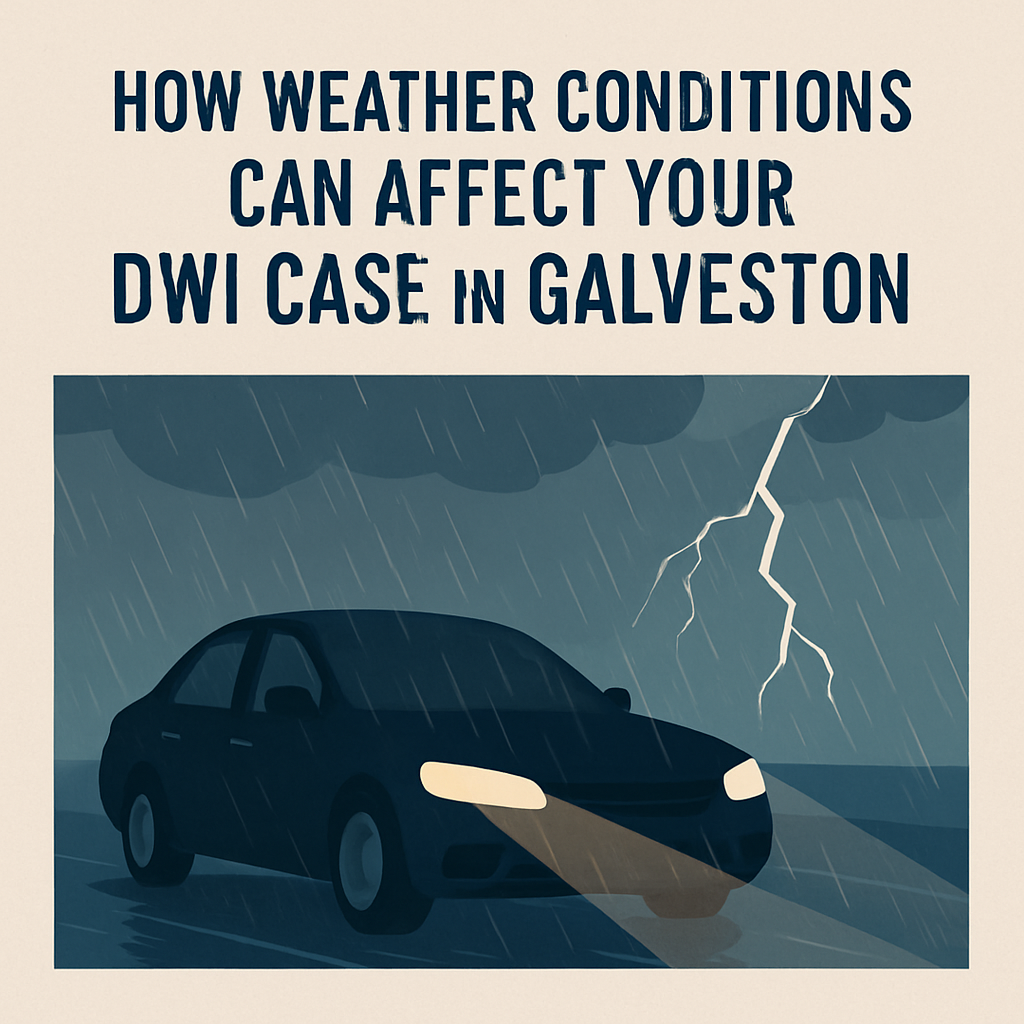
Galveston is no stranger to sudden downpours, especially during the late spring and summer months. Heavy rain reduces visibility, creates water buildup on the road, and often forces drivers to adjust their speed or steering. An officer observing from behind may interpret these adjustments as signs of impairment. For example, braking more frequently, weaving slightly to avoid puddles, or driving below the speed limit may be considered suspicious. In reality, these are normal and safe responses to slick pavement and reduced visibility.
If your traffic stop occurred during a storm, your attorney can highlight the specific weather reports and roadway conditions at the time. Video evidence from a patrol car may also show that the weather influenced your driving more than alcohol did. Establishing this context can be a crucial part of challenging the basis for the stop.
The Effect of Fog on DWI Stops
Thick fog is common along Galveston’s coast, particularly during cooler months and early mornings. Fog reduces sight lines and can make headlights appear distorted. Drivers often slow down, make wider turns, or overcorrect when visibility is low. An officer may see these behaviors as indicators of intoxication when they are in fact reasonable adjustments to poor conditions.
The Zendeh Del & Associates, PLLC Team








During foggy conditions, law enforcement officers may also find it harder to clearly observe your vehicle. Details such as lane position, braking distance, or swerving may be difficult to evaluate. If the stop was based on observations during fog, your lawyer may question whether those observations were reliable enough to justify a DWI investigation.
Wind and Coastal Storms
Galveston frequently experiences strong coastal winds, especially during hurricane season and seasonal storms. Strong gusts can push vehicles slightly across lanes or cause drivers to grip the wheel tightly, making their movements appear jerky. A driver struggling to keep control in high winds may look impaired even if they are fully sober.
Storm conditions also affect how police conduct stops. Emergency vehicles may have difficulty maneuvering, communication equipment may be strained, and officers may be working under stress. These factors can create room for error in the judgment calls that lead to a DWI arrest. When defending your case, these conditions can be used to explain why certain assumptions may have been mistaken.
Field Sobriety Tests in Poor Weather
Field sobriety tests are designed to measure coordination, balance, and focus. Tests such as walking heel to toe in a straight line or standing on one leg depend heavily on stable ground and clear surroundings. Performing them on wet pavement, uneven surfaces, or in gusty winds can be challenging for any driver, even one who has not consumed alcohol.
Rain and poor lighting may also make it harder for officers to accurately observe whether you step off a line or sway slightly. Wind or cold temperatures can affect your physical responses, making the results unreliable. If your test was conducted during severe weather, an experienced attorney may argue that the results should not be taken as clear evidence of impairment.
See what our past clients have to say about us. These guys are amazing. They made a most horrific experience bearable. They treated me with respect and no judgment. I cannot describe how grateful I am for their representation with my case. 5 stars is not enough. I hope I never need them again but would ABSOLUTELY use them again and definitely recommend them.Client
Reviews
— Jennifer S.
— Kristin F.
How Weather Impacts Breath Testing
Breath tests are designed to provide a reading of blood alcohol content at the time of arrest. While the weather does not change your body’s alcohol level, it can influence the conditions in which the test is given. Breath-testing devices require calibration and stable environmental conditions to work properly. High humidity, sudden temperature changes, or electrical issues caused by storms may affect the device.
If there is any doubt about whether the machine was properly calibrated or maintained in Galveston’s coastal climate, your lawyer may challenge the reliability of the reading. Questioning the equipment used can be particularly powerful when combined with proof of unusual weather during the time of testing.
Delays in Blood Testing Caused by Storms
In some cases, officers request a blood test rather than relying on a breath test. Severe storms, flooding, or road closures can cause delays in transporting a person to a facility where a sample can be drawn. These delays matter because alcohol levels in the body change over time. If there was a long gap between the time of driving and the time of testing, the results may not reflect your true condition behind the wheel.
Your defense may include a detailed review of the timeline between arrest and testing, matched with weather reports that explain why delays occurred. Demonstrating this gap can raise questions about whether the evidence is valid.
Case Results
The Role of Context in DWI Defense
Every DWI case is influenced by context. A stop made on a clear evening is very different from one made in a torrential storm. Judges and juries understand that weather creates obstacles, and they may be open to arguments that explain how those obstacles affected your driving or test results.
An experienced defense attorney can gather local weather data, review dash camera footage, and question officers about the exact conditions during your stop. By weaving these details into the broader defense strategy, your attorney can show that the evidence against you may not tell the full story.
Why Galveston Weather Requires Special Consideration
Galveston’s unique climate makes it more likely that weather will play a role in DWI cases. With frequent rain, humidity, and the constant threat of tropical storms, local drivers must constantly adjust to conditions that would be unusual in other parts of Texas. For this reason, legal strategies in Galveston should always consider the environmental factors that may have influenced a stop.
Attorneys who are familiar with the area know how to incorporate these elements into a defense. This knowledge can make the difference between a case that looks straightforward and one that raises serious questions about the reliability of the evidence.
How Zendeh Del and Associates Can Help
At Zendeh Del and Associates, PLLC, we understand how coastal conditions influence DWI arrests. Our team reviews not only the facts of your case but also the surrounding circumstances, including the weather that may have affected your stop, your test, and the collection of evidence. We take the time to analyze whether these conditions were taken into account and fight to ensure that your side of the story is heard.
If you have been arrested for DWI in Galveston or nearby communities, you do not have to navigate the process alone. Contact Zendeh Del and Associates, PLLC at (409) 204-0070 for a free consultation. We will listen to your story, review the evidence, and explain how weather and other circumstances may impact your case.