
An officer walks up to your window during a traffic stop and says:
“I smell marijuana.”
A few minutes later, the officer is searching the vehicle.
That scenario became more complicated after Texas legalized hemp because hemp and marijuana can smell alike. But as of October 2026, several Texas appellate courts have continued to hold that an officer’s detection of an odor believed to be marijuana can provide probable cause to search a vehicle—even though legal hemp may produce an indistinguishable odor.
That does not mean every search based on a claimed marijuana smell is automatically lawful.
When I review a marijuana smell car search in Texas, I want to know exactly what the officer claims to have smelled, where the odor supposedly came from, what the body-camera video shows, whether there were additional facts supporting the search, and whether the officer’s account is credible.
Awards & Media Appearances


















Why Texas Hemp Law Complicated Marijuana Searches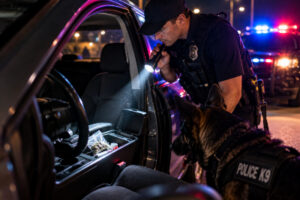
Texas legalized hemp in 2019.
Under current Texas law, hemp generally includes Cannabis sativa L. and its derivatives containing no more than 0.3% delta-9 THC on a dry-weight basis.
Texas law also excludes hemp and the tetrahydrocannabinols in hemp from the definition of a controlled substance.
That created an obvious problem for roadside searches.
Legal hemp and illegal marijuana can look and smell extremely similar. In some cases, officers have acknowledged that they cannot distinguish the two by odor alone.
So defendants began arguing that the smell of cannabis could no longer establish probable cause because the odor might be coming from lawful hemp.
Texas appellate courts have considered that argument repeatedly.
So far, several have rejected it.
What Is Probable Cause?
The Fourth Amendment generally protects people against unreasonable searches.
One important exception to the warrant requirement is the automobile exception.
If police have probable cause to believe a vehicle contains contraband or evidence of a crime, they may generally search the vehicle without first obtaining a warrant.
Probable cause does not require proof beyond a reasonable doubt.
It asks whether the facts known to the officer would create a fair probability or substantial chance that contraband or evidence of a crime will be found.
That distinction matters in marijuana-odor cases.
The question at the roadside is usually not whether police have scientifically proven the substance is illegal marijuana.
The question is whether the facts available to the officer supplied probable cause to believe illegal contraband would be found.
Historically, How Did Courts Treat Marijuana Odor?
Before hemp legalization, Texas courts had long treated marijuana odor as powerful evidence supporting a vehicle search.
Texas appellate decisions repeatedly held that an officer who smelled marijuana coming from a vehicle could have probable cause to search it.
Courts applied that reasoning to both burnt and raw marijuana odors.
The reasoning was straightforward: marijuana possession was illegal, so an odor associated with marijuana could indicate that illegal marijuana was inside the vehicle.
Hemp legalization challenged one part of that logic.
The odor no longer necessarily pointed only to illegal conduct.
But that did not cause Texas appellate courts to abandon the traditional rule.
The Zendeh Del & Associates, PLLC Team








Does Legal Hemp Change the Analysis?
It complicates the factual analysis, but under current Texas appellate law, hemp has generally not eliminated marijuana odor as a basis for probable cause.
A particularly important recent decision is Outlaw v. State, decided by the Thirteenth Court of Appeals in August 2025.
The defendant argued that marijuana odor could no longer establish probable cause because marijuana and legal hemp are indistinguishable by smell.
The court rejected that argument and reaffirmed that marijuana odor can provide probable cause to search a vehicle. It relied in part on decisions from Dallas, San Antonio, Tyler, and Amarillo that had reached similar conclusions after hemp legalization.
The Dallas Court of Appeals reached a similar conclusion in State v. Broner in 2025. There, the trial court had suppressed evidence after recognizing that legal hemp and illegal marijuana can smell identical. The appellate court reversed, reasoning that marijuana possession remains illegal and that an officer does not have to know with absolute certainty that the substance producing the odor is marijuana before probable cause can exist.
That means the argument “it could have been hemp” does not, by itself, necessarily defeat probable cause under current Texas appellate decisions.
But that is not the same thing as saying the officer automatically wins whenever the words “I smelled marijuana” appear in a report.
The defense can still challenge whether the officer actually smelled what they claimed to smell and whether the total circumstances justified the search.
Burnt Marijuana vs. Raw Marijuana Odor
Officers sometimes describe the odor as either burnt marijuana or raw marijuana.
The distinction can matter factually.
A claimed burnt odor may suggest that cannabis was recently smoked inside the vehicle. A claimed raw odor may suggest that plant material is physically present somewhere in the vehicle.
Texas courts have historically found probable cause based on both types of odor.
But when I review the case, I want more than the label.
Was the officer specific about the odor?
How strong was it?
Did the officer claim it came from the vehicle or from a person standing outside it?
Did another officer smell it?
Did anyone mention the smell on the body camera before the search began?
Was actual marijuana ultimately found?
Was there smoke in the vehicle?
Did the occupants dispute the officer’s claim?
Those details can matter when the legality of the search depends heavily on the officer’s credibility.
What if Police Find THC Vape Cartridges or Gummies?
THC products require a more careful analysis than loose plant material.
A vape cartridge, edible, gummy, oil, or concentrate does not necessarily tell an officer everything about its legal status just by looking at it.
Texas law distinguishes lawful hemp and hemp-derived products from controlled substances based in part on their chemical composition and THC concentration.
That means chemical testing may become important later in determining what the substance actually was.
But probable cause is judged based on what the officer reasonably knew at the time of the search—not solely on the final laboratory result.
If an officer first discovers a cartridge or edible during a lawful search, that discovery may affect how the investigation develops.
The defense should examine the packaging, labeling, laboratory testing, statements made at the scene, and the legal basis that permitted police to reach the item in the first place.
Can Police Search the Entire Vehicle?
Sometimes.
If officers have probable cause to believe contraband is somewhere in a vehicle, the automobile exception can permit a search of areas where that particular contraband could reasonably be concealed.
The United States Supreme Court has held that when probable cause extends to the vehicle generally, officers may search parts of the vehicle and containers capable of concealing the object of the search.
That can include areas such as the passenger compartment, console, glove compartment, trunk, bags, and other containers—depending on what police have probable cause to look for.
The lawful scope of the search is tied to its object.
For example, probable cause to search for a small quantity of drugs may justify looking in places capable of holding drugs. It would not automatically justify every conceivable intrusion unrelated to what officers reasonably believe they are searching for.
Can Police Search Locked Containers?
A lock does not automatically prevent a search under the automobile exception.
The Supreme Court has held that when police have probable cause to search a vehicle for contraband, the authorized search can extend to containers within the vehicle that could conceal the object of the search.
That may include closed containers and, depending on the circumstances and scope of probable cause, locked containers capable of holding the suspected contraband.
There is an important distinction, however.
Sometimes probable cause relates only to a particular container rather than the entire vehicle. The exact scope of the search can depend on what facts established probable cause and what officers reasonably believed they were looking for.
That is why I want to identify the moment probable cause allegedly arose and precisely what the officers believed it authorized them to search.
What if the Driver Says the Marijuana Belongs to a Passenger?
Ownership and search authority are separate questions.
An officer might have probable cause to search a vehicle even if the driver says the marijuana belongs to someone else.
But who possessed any contraband police eventually find is a different issue.
If marijuana or another controlled substance is found in a passenger’s bag, the State still has to establish the elements of the criminal charge against the person it prosecutes.
The driver does not automatically possess everything inside every passenger’s belongings.
Likewise, a passenger does not automatically possess everything found elsewhere in the vehicle.
That is where issues such as location, accessibility, ownership of the container, statements, personal belongings, and other evidence connecting a particular person to the contraband may become important.
Case Results
Bodycam Evidence and the Officer’s Claimed Odor
A camera cannot record a smell.
That creates an unusual evidence problem.
If an officer says, “I smelled marijuana,” the body camera cannot independently confirm whether the odor existed.
But the video can still be extremely important.
I look at when the officer first mentions the odor.
Does the officer immediately tell another officer that marijuana is present?
Does the officer ask the occupants about marijuana before deciding to search?
Does the officer initially ask for consent to search and only mention an odor after consent is refused?
Do multiple officers react as though they detect the same odor?
Does the officer’s report describe the sequence differently from the video?
What is found during the search?
In a 2026 San Antonio appellate case, the defendant argued at the suppression hearing that the officer had not actually smelled marijuana. That illustrates an important distinction: a defendant can challenge the factual credibility of the claimed odor separately from arguing that cannabis odor is legally insufficient because it could have been hemp.
Body-camera footage can be critical to that credibility analysis.
Challenging the Search Through a Motion to Suppress
If police searched a vehicle based on a claimed marijuana odor, a defense lawyer may examine whether the evidence should be challenged through a motion to suppress.
The questions can include:
Was the original traffic stop lawful?
Was the detention improperly extended?
When did the officer first claim to smell marijuana?
Where did the odor allegedly originate?
Did the officer have training or experience identifying marijuana odor?
Was the claimed odor consistent with what the video shows?
Were there other facts supporting probable cause?
Did officers search beyond the areas justified by the alleged probable cause?
Was consent requested or given?
Did the officer’s testimony at the suppression hearing match the body-camera recording and police report?
The fact that current Texas appellate cases often recognize marijuana odor as sufficient probable cause does not eliminate these questions.
It makes the factual investigation even more important.
At Zendeh Del & Associates, PLLC, we examine the entire sequence of a vehicle search—from the reason for the traffic stop through the claimed development of probable cause and the scope of the search itself.
If police searched your vehicle in Galveston or Galveston County because an officer claimed to smell marijuana, the legality of the search depends on the specific facts and the law in effect at the time.
Current-law note: This article reflects Texas law reviewed through October 1, 2026. Marijuana, hemp, THC-product regulation, and Fourth Amendment case law can change. The law should be checked again immediately before publication or reliance on this article.
This article provides general information about Texas criminal law and is not legal advice. Every case depends on its individual facts, evidence, and circumstances.
Client
Reviews
See what our past clients have to say about us.

These guys are amazing. They made a most horrific experience bearable. They treated me with respect and no judgment. I cannot describe how grateful I am for their representation with my case. 5 stars is not enough. I hope I never need them again but would ABSOLUTELY use them again and definitely recommend them.
— Jennifer S.