
Yes, in some circumstances. A Texas police officer does not always have to personally watch a vehicle move for a DWI case to be investigated or prosecuted. Police and prosecutors may rely on circumstantial evidence, including witness statements, surveillance footage, crash evidence, the location and condition of the vehicle, possession of the keys, admissions, and other facts that connect a person to operating a motor vehicle while intoxicated.
The arrest itself must still be lawful. Texas law places specific limits on warrantless arrests, so the absence of firsthand observation can matter when a defense lawyer reviews the legal basis for the arrest. At trial, the State must prove beyond a reasonable doubt that the accused was intoxicated while operating a motor vehicle in a public place.
If you are facing a DWI allegation in Galveston, Texas, and no officer saw you drive, the operation and timing evidence may become central issues. Zendeh Del & Associates PLLC represents people in DWI cases involving disputed operation, parked vehicles, crashes, delayed police contact, and similar fact patterns.
Awards & Media Appearances


















Texas DWI Law Requires Proof of Operation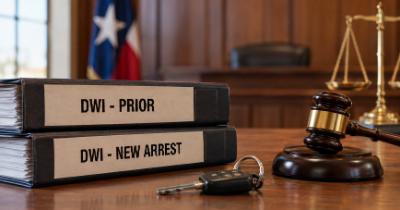
Texas Penal Code Section 49.04 states that a person commits DWI if the person is intoxicated while operating a motor vehicle in a public place.
The statute does not require the arresting officer to personally watch the vehicle travel on a road. It does require the State to connect the accused person, the operation of the vehicle, the public place, and the alleged intoxication.
Intoxication by itself does not establish DWI. When officers arrive after the alleged driving has ended, the State may have to rely on other evidence to establish who operated the vehicle and whether that person was intoxicated at the relevant time.
For a broader explanation of DWI charges and defense issues in Galveston, visit:
https://www.galvestonjustice.com/galveston-dwi-lawyers/
What Does “Operating” a Vehicle Mean in a Texas DWI Case?
Texas law treats “operating” as broader than simply driving a moving vehicle from one location to another.
The Texas Court of Criminal Appeals has explained that courts may consider the totality of the circumstances and whether a person took action that affected the functioning of a vehicle in a way that enabled its use. This means a vehicle does not always have to be moving at the moment police arrive for operation to become an issue.
At the same time, simply being inside a vehicle does not automatically establish operation. A person may be sitting in the driver’s seat without having driven. Someone may have moved into the driver’s seat after another person left. A parked vehicle may also present uncertainty about when it moved, who moved it, and whether the accused person was intoxicated at that time.
The evidence must be examined as a whole.
Zendeh Del & Associates PLLC has previously discussed a Texas DWI case involving a running parked vehicle and disputed operation:
https://www.galvestonjustice.com/blog/murray-v-state-running-parked-car-insufficient-for-dwi/
The Zendeh Del & Associates, PLLC Team








What Evidence Can Police Use if They Did Not See You Drive?
Police may try to establish operation through several forms of direct or circumstantial evidence, including:
- A witness who identifies you as the driver
- A 911 caller who describes the vehicle and driver
- Security video, traffic-camera footage, or parking-lot footage
- Police body-camera or dash-camera recordings
- Vehicle damage or roadway evidence connected to a recent crash
- Your location in or near the vehicle
- Whether you were found in the driver’s seat
- Whether the engine was running
- Whether the vehicle was in gear
- Where the keys were located
- Statements about who was driving or where the vehicle came from
- Receipts, parking records, rideshare records, or other time-stamped records
- Lawfully obtained phone or location records that may help establish timing
No single fact proves every DWI case. The strength of the evidence depends on its reliability, timing, admissibility, and relationship to the other facts.
Can a Witness Be Enough to Identify the Driver?
A witness can provide evidence that supports a DWI investigation or prosecution even when the officer arrived after the alleged driving occurred.
The reliability of the identification can still be challenged. A defense lawyer may examine:
- Whether the witness had a clear view
- How long the witness observed the person
- The distance between the witness and the vehicle
- Lighting, weather, or other visibility conditions
- Whether several people were near the vehicle
- Whether the witness gave consistent descriptions
- Whether video confirms or conflicts with the witness account
- Whether the witness had any reason to be mistaken
Surveillance footage may be especially useful in parking lots, hotels, restaurants, convenience stores, apartment complexes, and other commercial areas. Some recording systems overwrite footage after a limited period, so preserving relevant video can become time-sensitive.
Case Results
What if Police Find You Sleeping in a Parked Car?
Sleeping in a parked vehicle does not automatically establish DWI, but it also does not prevent police from investigating whether the vehicle was operated while the person was intoxicated.
Police may consider facts such as:
- Where the vehicle was located
- Whether the engine was running
- Whether the vehicle was in gear
- Whether the person was in the driver’s seat
- Where the keys were located
- Whether the lights, air conditioning, or other vehicle systems were operating
- Whether the vehicle appeared to have recently moved
- Whether witnesses saw the vehicle arrive
- Whether statements or video connect the person to earlier driving
A defense lawyer may focus on whether the evidence establishes operation or only presence inside the vehicle. The timeline also matters when the alleged driving occurred before police arrived.
What if Police Arrive After a Crash?
A crash can lead to a DWI investigation even when officers did not witness the collision.
Officers may speak with drivers, passengers, witnesses, emergency personnel, and nearby property owners. They may also examine vehicle damage, debris, skid marks, surveillance footage, body-camera recordings, and statements made at the scene.
The identity of the driver can still be disputed. Ownership of a vehicle does not, by itself, prove that the owner was driving at the time of a crash. Standing near a vehicle also does not, by itself, establish operation.
Police must also have lawful authority for an arrest. Texas Code of Criminal Procedure Chapter 14 governs many warrantless-arrest situations. Whether an officer had authority to make a warrantless DWI arrest can depend on the exact circumstances, including where the person was found and which statutory exception officers relied upon.
For that reason, a defense lawyer may examine both the evidence of DWI and the legal basis for the arrest.
Why the Timing of Intoxication Matters
Even when the State can establish operation, it must still prove that the accused person was intoxicated while operating the vehicle.
If police encounter someone after the alleged driving ended, observations made later do not automatically establish the person’s condition at the earlier time. The timeline may become a central part of the case.
Questions may include:
- When the alleged driving ended
- When police first contacted the person
- When alcohol or another substance was consumed
- Whether anything was consumed after the vehicle stopped
- When field sobriety exercises were conducted
- When a breath or blood specimen was collected
- Whether the State can reliably connect later test results to the time of alleged operation
A breath or blood result can be evidence in a DWI case, but the State still has to prove the required connection between intoxication and operation.
Field Sobriety Tests Do Not Establish Who Was Driving
Field sobriety exercises may be offered as evidence relating to alleged impairment. They do not answer the separate question of who operated the vehicle.
When police arrive after a vehicle has stopped, a defense lawyer may review:
- The officer’s instructions and demonstrations
- How the officer scored the exercises
- Body-camera footage
- The surface where the exercises occurred
- Footwear
- Physical limitations or injuries
- Fatigue
- Weather and lighting
- The length of time between alleged driving and testing
The operation issue and the intoxication issue should be evaluated separately before considering how the State may try to connect them.
What Can a DWI Defense Lawyer Examine?
A Galveston DWI defense lawyer may review:
- Whether police had lawful authority for the arrest
- Whether the State can reliably identify the driver
- Whether the evidence establishes operation under Texas law
- Whether witness accounts are accurate and consistent
- Whether video supports or contradicts written police reports
- Whether statements were accurately recorded and lawfully obtained
- Whether intoxication can be linked to the time of alleged operation
- Whether breath or blood evidence was lawfully obtained
- Whether chemical evidence was properly handled and tested
- Whether evidence may be excluded or suppressed
- Whether missing video, records, or witnesses create gaps in the State’s timeline
For information about broader criminal defense and constitutional issues, visit:
https://www.galvestonjustice.com/galveston-criminal-defense-lawyers/
What Should You Do After a DWI Arrest When No Officer Saw You Drive?
Preserving information early can help your attorney evaluate what happened.
Consider taking these steps:
- Keep paperwork from the jail, court, police department, and Texas Department of Public Safety
- Write a private timeline of events while the details are still fresh
- Preserve receipts, parking records, rideshare records, photographs, messages, and other time-stamped information
- Identify passengers, witnesses, and other people who may know who was driving
- Note nearby businesses, homes, parking facilities, or intersections that may have video
- Preserve any photographs or videos related to the vehicle or location
- Discuss the incident privately with your attorney rather than posting details publicly or on social media
The absence of an officer eyewitness does not mean a DWI charge will automatically be dismissed. It also does not mean the State can necessarily prove operation beyond a reasonable doubt. The answer depends on the admissible evidence and the timeline.
To learn more about Jonathan Zendeh Del, visit:
https://www.galvestonjustice.com/attorney-jonathan-zendeh-del/
Speak With a Galveston DWI Attorney About the Evidence
If you were arrested for DWI in Galveston, Texas, even though no officer saw you drive, the operation evidence deserves careful review.
Zendeh Del & Associates PLLC can examine witness statements, video, crash evidence, police reports, chemical testing, the alleged timeline, and the legal basis for the arrest. The firm represents clients in Galveston and nearby Texas communities.
Call (409) 215-7500 to discuss your circumstances and legal options.
This article is for informational purposes only and is not legal advice. Consult an attorney about your specific situation.