
The police officer never saw you drive.
Maybe you were sitting in a parked vehicle when the officer arrived. Maybe you were asleep behind the wheel. Maybe police showed up after an accident and found you standing outside the car.
Does that mean the State cannot charge you with DWI?
Not necessarily.
Texas DWI law does not simply ask whether a police officer personally watched someone driving down the road. The statute makes it an offense to be intoxicated while operating a motor vehicle in a public place.
That word—operating—can become one of the most important issues in a DWI case where nobody actually saw the accused driving.
When I review one of these cases, I want to know what evidence the State has that my client operated the vehicle, when that operation supposedly occurred, and whether the State can connect any evidence of intoxication to that time.
Awards & Media Appearances


















Texas DWI Law Requires “Operating” a Motor Vehicle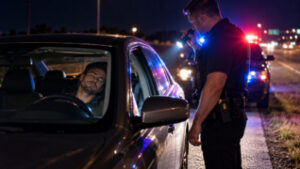
Texas Penal Code §49.04 provides that a person commits DWI if the person is intoxicated while operating a motor vehicle in a public place.
Notice what the statute does not say.
It does not say a police officer must personally witness the person driving.
That means a case does not automatically disappear simply because the officer arrived after the vehicle had stopped.
Prosecutors may try to establish operation through circumstantial evidence.
The defense can examine how strong—or weak—that evidence actually is.
What Does “Operating” Mean?
Texas courts have interpreted “operating” more broadly than simply driving a moving vehicle down the highway.
The Texas Court of Criminal Appeals has explained that operation does not necessarily require conventional driving. Courts examine the totality of the circumstances to determine whether the defendant took action to affect the functioning of the vehicle in a way that enabled its use.
That makes parked-car cases highly fact-dependent.
Where was the vehicle?
Was the engine running?
Where were the keys?
Where was the accused sitting?
Was the vehicle in a traffic lane, parking lot, driveway, roadside shoulder, or another location?
Was there evidence that it had recently moved?
Those details can become critical.
Does a Police Officer Have to Personally See You Drive?
No.
The State can attempt to prove operation with circumstantial evidence and witness testimony even if the arresting officer never personally observed the vehicle moving.
Imagine police arrive at the scene of a single-car crash.
One person is standing next to the vehicle. Nobody else is nearby. That person has the keys and tells the officer, “I was driving home when I lost control.”
The officer did not see the driving.
But prosecutors may rely on the surrounding circumstances and the person’s statement to establish who operated the vehicle.
Now change the facts.
Several people are standing around the vehicle. Nobody admits driving. The registered owner was one of the passengers. Witnesses give conflicting accounts.
That can create a very different case.
The question becomes: What evidence actually establishes who operated the vehicle?
DWI Investigations After an Accident
Accident cases frequently involve officers arriving after the alleged driving has ended.
I want to reconstruct what happened before police arrived.
Who called 911?
What did the caller say?
Did anyone witness the crash?
Who was inside the vehicle?
Where was each person when officers arrived?
Who appeared injured?
Were airbags deployed?
Was there evidence suggesting where someone had been sitting?
What did the occupants tell police?
Did nearby businesses, homes, traffic cameras, or other vehicles capture video?
A police officer may form an opinion about who was driving very quickly.
The defense does not have to accept that assumption without examining the underlying evidence.
The Zendeh Del & Associates, PLLC Team








Parked and Running Vehicles
A vehicle does not necessarily have to be moving at the exact moment police approach for operation to become an issue.
Texas appellate courts have upheld findings of operation in some cases involving people discovered inside parked or stationary vehicles with the engine running.
But that does not mean every person sitting in a running car is automatically guilty of DWI.
The specific circumstances matter.
A running vehicle stopped in a lane of traffic presents different facts from a vehicle legally parked in a parking space.
Someone actively manipulating the vehicle’s controls presents different evidence from someone sitting in a passenger seat.
This is why I do not treat “the engine was running” as the end of the analysis.
I want the entire factual picture.
Sleeping in a Vehicle
Sleeping-in-the-car cases demonstrate why “operating” can become complicated.
Police may discover someone asleep behind the wheel with the engine running.
The State may argue that the person’s position, possession of the keys, running engine, vehicle location, and other circumstances establish operation.
The defense may have very different questions.
How long had the vehicle been there?
Was it legally parked?
Is there evidence showing when it arrived?
Did anyone actually see the person drive?
Could someone else have driven the vehicle there?
Was the engine running for heat or air conditioning?
Can the State establish when the alleged operation occurred?
These are not theoretical questions for our firm.
Zendeh Del & Associates has a published not-guilty DWI jury-trial result involving a client who was asleep on the side of the road with the car on and had a .248 breath result.
A high breath result did not eliminate the issues the State still had to prove.
Every case is different, and a prior result does not guarantee the outcome of another case. But the result illustrates an important point: finding someone asleep in a running vehicle does not make careful examination of the operation evidence unnecessary.
What if You Are Standing Outside the Car When Police Arrive?
This situation is common after accidents and disabled vehicles.
When police arrive and everyone is already outside the vehicle, identifying the driver may become an evidentiary question.
The officer may rely on statements, witness accounts, vehicle ownership, injuries, seating evidence, keys, video, or other circumstances.
But being the registered owner does not necessarily prove that the owner was driving.
Standing closest to the driver’s door does not necessarily prove it either.
I want to know what evidence connects the accused to the driver’s seat during the relevant time.
Statements About Who Was Driving
Statements can become some of the strongest evidence in a no-witness DWI case.
An officer may ask:
“Were you driving?”
“Where were you coming from?”
“What happened?”
“How much did you have to drink?”
The answers can help prosecutors establish facts they did not personally observe.
That is why the body-camera footage matters.
I want to hear the exact question and exact response—not simply read an officer’s summary of the conversation.
Context matters.
So do ambiguous statements, interruptions, assumptions, and follow-up questions.
Case Results
Witness Testimony
Police are not the only witnesses who matter.
A civilian may have seen the vehicle moving before an accident.
Another motorist may have called 911.
A passenger may identify the driver.
A bartender, security employee, tow-truck operator, paramedic, or other witness may provide information about the timeline.
The defense can examine whether those witnesses actually observed the relevant events, how well they could see, whether their accounts changed, and whether other evidence supports or contradicts their statements.
Keys, Engine Temperature, Location Data and Other Circumstantial Evidence
When nobody saw the accused driving, prosecutors may build the operation case from circumstances.
Depending on the facts, that could include the location of the keys, whether the engine was running, the vehicle’s location, physical evidence from an accident, surveillance footage, 911 calls, receipts, phone or location information obtained through lawful means, and statements from the accused or other witnesses.
None of those pieces of evidence should automatically be considered in isolation.
The important question is what they establish when considered together.
Circumstantial evidence can be powerful.
It can also leave gaps.
Finding those gaps is part of reviewing the case.
Proving When the Driving Actually Occurred
There is another issue that can be just as important as proving who operated the vehicle:
When did the operation occur?
Suppose police find someone beside a parked vehicle at 2:00 a.m.
Evidence suggests that person drove the vehicle at some point.
But when?
Five minutes earlier?
An hour earlier?
Several hours earlier?
The timeline can matter because DWI requires the State to connect intoxication to the time the person was operating the vehicle.
Evidence that someone was intoxicated when police arrived is not automatically identical to proof of their condition at an earlier point in time.
That becomes particularly important when chemical testing occurs later.
Why Timing Matters to BAC Evidence
A breath or blood test tells us the alcohol concentration measured when the specimen was taken.
The alleged driving may have occurred earlier.
That creates a timing question.
How much time passed between the alleged operation and the test?
Was the person drinking after the vehicle stopped?
When was the person’s last drink?
What evidence establishes the timeline?
What does the State’s chemical-test evidence actually establish about the relevant time?
Texas courts have addressed the relationship between later chemical-test results and proof of intoxication at the time of driving. A later result may still be relevant evidence, but the ultimate DWI allegation concerns intoxication while operating the vehicle.
That is why I do not look at a BAC number in isolation.
In a case where nobody saw the driving, I want to examine the entire sequence:
Who operated the vehicle?
What evidence proves it?
When did the operation occur?
When did any drinking occur?
When did police arrive?
When were observations of alleged intoxication made?
When was the breath or blood specimen collected?
Those questions can reveal weaknesses that are easy to miss when a case is reduced to “person found near car + high BAC.”
At Zendeh Del & Associates, PLLC, we examine the evidence behind a Texas DWI allegation—including operation, witness testimony, video, statements, accident evidence, chemical testing, and the timeline connecting them.
If you were arrested for DWI in Galveston or Galveston County even though no officer saw you driving, the firm offers free consultations to discuss the circumstances of the case.
This article provides general information about Texas DWI law and is not legal advice. Every case depends on its individual facts, evidence, and circumstances.
Client
Reviews
See what our past clients have to say about us.

These guys are amazing. They made a most horrific experience bearable. They treated me with respect and no judgment. I cannot describe how grateful I am for their representation with my case. 5 stars is not enough. I hope I never need them again but would ABSOLUTELY use them again and definitely recommend them.
— Jennifer S.