
Texas Governor Greg Abbott has directed state agencies to pause funding for Flock cameras amid growing concerns about how automated license plate reader data can be collected, searched, and shared. The decision follows reporting that Texas funding helped support thousands of cameras capable of recording license plates and detailed vehicle characteristics. For people in Galveston, Texas, the development raises a larger constitutional question: When does technology that records vehicles on public roads become a tool for tracking a person’s movements? Zendeh Del & Associates PLLC believes Texans should pay close attention to how surveillance technology affects Fourth Amendment protections.
For criminal defendants, this issue is more than an abstract debate about technology. Zendeh Del & Associates PLLC understands that the source, scope, and legality of evidence can become central questions in a criminal case. The funding pause does not ban Flock cameras, nor does it automatically establish that searches of Flock data violate the Constitution. It does signal that Texas officials are taking concerns about the scale and potential misuse of automated surveillance seriously.
Awards & Media Appearances

















What Are Flock Cameras?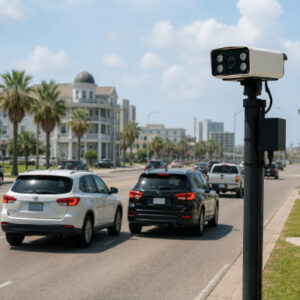
Flock cameras are automated license plate readers, but describing them as cameras that merely photograph license plates does not explain their full capabilities.
According to The Texas Tribune, Flock systems can use artificial intelligence to collect information about a vehicle, including its license plate, make, model, color, dents, and bumper stickers. Participating law enforcement agencies can also permit other agencies to search their camera data, potentially connecting individual camera systems into a much larger network.
That distinction matters.
A single camera observing a vehicle at one intersection presents one set of privacy questions. A network containing thousands of cameras, searchable across locations and jurisdictions, can present a different question because repeated observations may reveal patterns of movement.
A database could potentially show when a particular vehicle passed different cameras and where those cameras were located. Depending on the amount of available information, investigators may be able to use those observations to develop a picture of a vehicle’s movements.
For Texans concerned about government surveillance, the central issue is not simply whether a license plate can be observed from a public roadway. The larger issue is how much information can be accumulated, how long it can be stored, who can search it, and what legal process should govern those searches.
Why Did Governor Abbott Pause State Funding?
On August 28, 2026, The Texas Tribune reported that Governor Abbott ordered Texas state agencies to pause funding for Flock cameras.
The decision followed scrutiny of how state funds had helped expand the network.
The Tribune reported that the Motor Vehicle Crime Prevention Authority had helped state and local agencies install at least 3,200 Flock cameras since 2023. The publication’s investigation also found that at least $30 million connected to a Texas automobile insurance fee had been devoted to expanding the surveillance network.
The underlying fee came from legislation intended to address motor vehicle crime, including catalytic converter theft. The Tribune reported that lawmakers said using those funds for Flock cameras had not been discussed when the legislation was considered.
Abbott’s action pauses state funding. It should not be confused with a statewide prohibition on the technology.
Local governments may have other funding sources, and existing cameras do not necessarily disappear because state agencies stop financing new ones.
The development is still significant because it places government surveillance, data access, and accountability under greater scrutiny.
Why Flock Cameras Raise Fourth Amendment Questions
The Fourth Amendment to the United States Constitution protects people against unreasonable government searches and seizures.
Applying that protection to modern technology is not always straightforward.
Police officers have historically been able to observe vehicles traveling on public roads. Technology changes the scale of what government agencies can observe and retain.
An officer seeing a vehicle pass an intersection creates a fleeting observation. An automated network can potentially record large numbers of observations, preserve them in a searchable database, and allow investigators to search information collected by cameras that the investigating agency does not operate.
That difference raises a constitutional question:
At what point does widespread automated observation become a search of a person’s movements that should require judicial authorization?
The funding pause does not answer that question.
Courts, lawmakers, and government agencies will continue to confront issues involving emerging surveillance technologies. The constitutional analysis can also depend on the specific facts of a case, including what information investigators obtained, how they obtained it, how much historical information they reviewed, and what other investigative methods were involved.
The Concern Is About Aggregated Surveillance
There is a meaningful difference between seeing a vehicle once and creating a record of its movements over time.
Imagine that cameras record the same vehicle at several locations. One observation may say very little. Repeated observations could potentially reveal patterns concerning where that vehicle travels and when it appears at particular locations.
The Texas network has grown considerably.
The Tribune reported that the Motor Vehicle Crime Prevention Authority funded or supported at least 3,200 cameras, while a crowdsourced watchdog project had identified roughly 13,000 Flock cameras across Texas. The exact statewide total remains unclear.
Flock also operates beyond Texas.
According to information reported by the Tribune, approximately 7,000 law enforcement agencies nationwide use roughly 120,000 Flock cameras and related surveillance products. Agencies participating in Flock’s national lookup program can search data collected by participating agencies elsewhere in the country.
That ability is one reason privacy advocates are focused on networked surveillance rather than individual cameras.
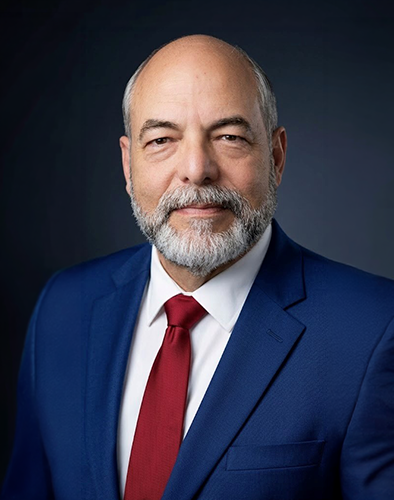
The Zendeh Del & Associates, PLLC Team





Reports of Misuse Show Why Oversight Matters
Privacy concerns become more serious when a powerful surveillance system can be accessed for improper purposes.
The Tribune reported that a Lufkin police officer was indicted on 100 counts of misusing official information after allegedly using Flock cameras to surveil 11 people for more than a year. The publication also reported investigations, arrests, or disciplinary actions involving officers in several other Texas jurisdictions.
An allegation is not the same as a conviction, and each case must be judged on its own evidence.
Still, these reports demonstrate why safeguards matter.
A surveillance system should not depend solely on the assumption that every person with access will always use it correctly. Effective safeguards can include:
- Strict limits on who may access vehicle data
- Documented reasons for searches
- Access logs and meaningful audits
- Clear data-retention periods
- Restrictions on sharing information with outside agencies
- Procedures for investigating suspected misuse
- Rules concerning searches unrelated to an active investigation
- Judicial oversight when constitutionally required
The question Texas faces is not simply whether surveillance technology can help law enforcement. The question is what limits should accompany that power.
Flock Cameras Can Also Be Valuable to Law Enforcement
The privacy debate should recognize why police departments use these systems.
Law enforcement agencies say automated license plate readers can help identify stolen vehicles, locate missing people, find wanted suspects, and investigate serious crimes.
Flock told the Tribune that its technology helps Texas officers investigate crimes, recover stolen vehicles, and locate missing people. The company has also stated its support for privacy safeguards that preserve legitimate law enforcement uses.
Texas police agencies have described practical benefits as well. The Tribune reported that officials in Temple credited the technology with helping address stolen vehicles.
The constitutional debate does not require Texans to choose between supporting law enforcement and supporting privacy.
Both interests can exist at the same time.
Police can have access to useful investigative technology while laws establish meaningful limits on when and how that technology may be used.
Could Flock Camera Evidence Affect a Criminal Case?
Potentially.
Suppose investigators use automated license plate reader data to identify a vehicle, establish a timeline, locate a suspect, or develop evidence that eventually contributes to an arrest.
A defense attorney may need to determine exactly how investigators obtained that information.
Questions could include:
- Which agency conducted the database search?
- What information did investigators enter?
- How many cameras or jurisdictions were searched?
- What period did the search cover?
- Was historical location information obtained?
- Was a warrant requested?
- What policies governed access to the database?
- Was information shared between agencies?
- Were required procedures followed?
- Did Flock data lead investigators to other evidence?
These questions do not mean that Flock evidence is automatically inadmissible.
They mean that the government’s method of obtaining evidence can matter.
A Galveston criminal defense lawyer evaluating a case involving surveillance evidence may examine the investigative timeline, available records, search warrants, reports, database information, and other evidence to determine whether a constitutional issue exists.
Case Results
What Should Texas Do Next?
Governor Abbott’s funding decision is an initial response, not the end of the debate.
Texas lawmakers may eventually need to establish clearer statewide rules concerning automated license plate reader networks.
Several questions deserve attention:
Should law enforcement need a warrant to conduct certain historical searches?
How long should vehicle location information remain stored?
Should agencies outside Texas have access to information collected about Texas drivers?
Who should be permitted to search these databases?
Should every search generate an audit record?
What consequences should apply when someone accesses the system for an unauthorized purpose?
Clear rules could protect legitimate investigations while reducing the risk that a public-safety tool develops into unrestricted mass surveillance.
Technology develops quickly. Constitutional protections cannot depend on surveillance technology remaining limited or inefficient.
New Technology Does Not Replace Constitutional Protections
The Fourth Amendment was designed to place limits on government power.
Those limits remain relevant when investigative techniques change.
Flock cameras illustrate the challenge clearly. An individual camera may collect information visible on a public road, while thousands of connected cameras can potentially produce something far more revealing when their records are combined and searched.
For residents of Galveston, Texas, this debate should be followed closely. The rules Texas adopts concerning warrants, data retention, sharing, access, and auditing may influence how automated surveillance evidence is used in criminal investigations for years to come.
Government agencies have legitimate reasons to investigate crime. Texans also have legitimate reasons to expect meaningful limits on government surveillance.
Both principles deserve protection.
Speak With a Galveston Criminal Defense Attorney About Your Rights
If police surveillance, vehicle tracking, a traffic stop, search, or other investigative technology played a role in your criminal case in Galveston, the evidence should be carefully reviewed. Zendeh Del & Associates PLLC represents people facing criminal charges and examines how law enforcement obtained and used evidence against them. Contact the firm today for a free consultation to discuss your circumstances and the legal options that may be available.
Client
Reviews
See what our past clients have to say about us.

These guys are amazing. They made a most horrific experience bearable. They treated me with respect and no judgment. I cannot describe how grateful I am for their representation with my case. 5 stars is not enough. I hope I never need them again but would ABSOLUTELY use them again and definitely recommend them.
— Jennifer S.