
Yes. Galveston police may investigate you after the alleged driving has ended, and prosecutors may later file a DWI charge. The passage of several hours does not automatically prevent a case. The State must still prove beyond a reasonable doubt that you operated a motor vehicle in a public place while intoxicated.
A delay can create serious proof questions. Signs of intoxication at a hotel, home, parking area, hospital, or police station do not automatically show your condition when you drove earlier. Investigators may rely on surveillance footage, witness accounts, receipts, statements, vehicle evidence, and later breath or blood testing to build a timeline. Your defense can examine whether those pieces actually connect your later condition to the earlier driving time.
Zendeh Del & Associates PLLC reviews delayed DWI allegations for people in Galveston, Texas, and nearby areas. The firm can examine the timeline, identify missing evidence, review testing procedures, and evaluate whether the State can prove each required element. Free consultations are available.
Awards & Media Appearances


















A later breath or blood result does not automatically establish intoxication at an earlier driving time. The State still needs evidence that reliably connects the result and surrounding circumstances to the time of operation.
A DWI Case Can Begin After Driving Ends 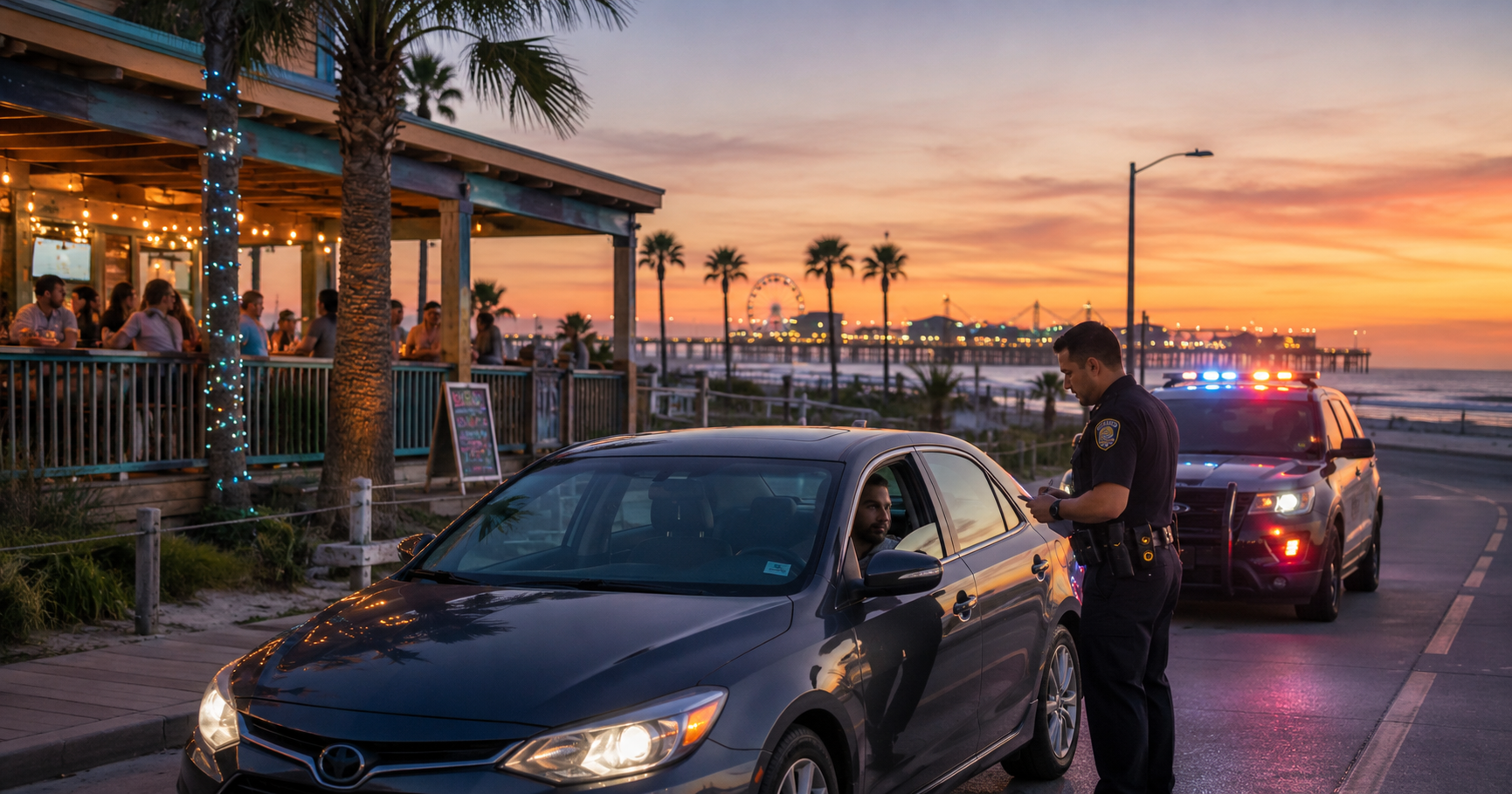
Texas Penal Code Section 49.04 defines DWI as being intoxicated while operating a motor vehicle in a public place. The statute focuses on your condition while you were operating the vehicle. It does not require an officer to personally observe every moment of driving.
A delayed investigation may begin after:
- A crash or abandoned vehicle report
- A witness reports a vehicle description or license plate
- Surveillance footage shows a vehicle leaving a bar or parking area
- Police locate a suspected driver at a hotel, home, hospital, or other location
- Investigators review body-camera footage, receipts, phone records, or other timestamps
- A prosecutor receives evidence after the immediate event
Police may continue investigating, seek an arrest warrant, or rely on a lawful warrantless-arrest exception when the facts meet Texas law. Prosecutors may file a charge after reviewing the evidence. A later arrest or charge does not remove the State’s duty to prove the case beyond a reasonable doubt.
Learn more about Galveston DWI defense:
https://www.galvestonjustice.com/galveston-dwi-lawyers/
What the State Must Prove
A prosecutor generally must establish three central points:
- You operated a motor vehicle.
- The operation occurred in a public place.
- You were intoxicated at the time of operation.
Texas law defines intoxication in two main ways. The State may allege that you did not have the normal use of your mental or physical faculties because of alcohol, a controlled substance, a drug, a dangerous drug, a combination of substances, or another substance. The State may also rely on an alcohol concentration of 0.08 or more.
The timing requirement matters. Evidence that you appeared intoxicated at 2:00 a.m. does not, by itself, establish that you were intoxicated when you allegedly drove at midnight. The prosecution needs a reasonable connection between the later observations and the earlier operation.
The Zendeh Del & Associates, PLLC Team








Why the Time Gap Matters
Alcohol concentration changes as alcohol is absorbed and eliminated. A later result may be higher, lower, or similar to the concentration at the earlier driving time. The answer depends on the timing and the facts.
A careful review may consider:
- When you began and stopped drinking
- What and how much you consumed
- Whether you ate before or during the drinking period
- Whether you consumed alcohol after the alleged driving
- When the vehicle was last seen moving
- When police first observed you
- When a breath or blood sample was collected
- Whether more than one test was performed
- What assumptions an expert used
Consider two different timelines. In the first, a person leaves a beach bar, takes a rideshare to a hotel, and consumes more alcohol in the room. Police arrive two hours later. The person’s condition at the hotel may not establish the person’s condition during any earlier driving.
In the second, a person is found shortly after a single-vehicle crash, remains at the scene, and has no apparent opportunity to drink after the crash. Those facts may create a stronger connection between the later observations and the earlier operation.
The length of the delay is not the only issue. What happened during the delay can be just as significant.
Later Blood or Breath Testing Does Not End the Inquiry
A breath or blood result collected after the alleged driving may be relevant, but the number reflects the alcohol concentration at the time the specimen was collected or tested. The legal question remains whether you were intoxicated while operating the vehicle.
Prosecutors may use retrograde extrapolation to estimate an earlier alcohol concentration from a later result. That analysis works backward from the testing time and depends on case-specific information. Texas courts have examined factors such as:
- The time between driving and testing
- The number of test results available
- Your weight and sex
- Your typical drinking pattern and alcohol tolerance
- The amount and type of alcohol consumed
- The duration of the drinking period
- The time of the last drink
- The amount of food consumed
- Whether you were still absorbing alcohol
- The elimination rate used in the calculation
A defense review may also examine the legal basis for the specimen, the blood-draw procedure, chain of custody, storage conditions, laboratory method, calibration and quality-control records, reported uncertainty, and the testimony used to connect the result to the driving time.
Roadside observations should also be reviewed in context:
https://www.galvestonjustice.com/galveston-failed-field-sobriety-test-attorneys/
Case Results
Evidence That May Be Used in a Delayed DWI Case
When no officer saw the vehicle in motion, the State may use direct and circumstantial evidence. Texas courts recognize that circumstantial evidence can support a DWI conviction when the combined facts permit a reasonable inference of operation and intoxication.
Evidence may include:
- Surveillance footage from bars, hotels, parking areas, streets, or nearby businesses
- Witness accounts, 911 calls, crash reports, and vehicle descriptions
- License plate records, parking records, receipts, and payment timestamps
- Rideshare records or phone location data obtained through lawful means
- Vehicle damage, debris, or other collision evidence
- Body-camera and dash-camera footage
- Statements about drinking, driving, vehicle ownership, or travel
- Breath, blood, urine, or medical testing
- Evidence of alcohol consumed after the alleged driving
- Hotel key logs, room charges, or security records
Circumstantial evidence can be persuasive, but each inference must still be reasonable. Vehicle ownership does not always prove who drove. Presence near a vehicle does not always prove operation. Drinking at a bar does not always prove intoxication. A later test result does not always establish the earlier alcohol concentration without a reliable timeline.
Can a Bar Receipt Prove DWI?
A bar receipt may show what was purchased and when the account closed. It may not show who consumed each drink, whether drinks were shared, when each drink was consumed, what food was eaten, or when you left the property.
A receipt is one part of the timeline, not a complete answer. Surveillance footage may provide context by showing whether you appeared steady, spoke clearly, left as a passenger, entered a rideshare, returned later, or entered a different vehicle.
Video may also reveal gaps in witness memory or assumptions in a police report. The defense should compare the footage, receipts, witness statements, and police timestamps rather than treating any single item as conclusive.
What Happens if Police Find You at Home or a Hotel?
Police contact at a second location can raise questions about entry, consent, detention, questioning, arrest authority, and warrants.
You should not physically resist or interfere with an officer. You also do not need to volunteer a detailed account of where you were, how much you drank, who drove, or what happened before police arrived. You may state that you want to remain silent and want to speak with an attorney.
When officers did not witness the alleged DWI, they may seek an arrest warrant or claim that a specific Texas warrantless-arrest exception applies. Whether the detention, entry, questioning, or arrest was lawful depends on the facts and the legal authority the officers relied upon.
An arrest issue does not automatically end a prosecution. A court may need to decide whether particular evidence should be suppressed and whether the remaining evidence can support the charge.
Learn more about broader criminal defense issues:
https://www.galvestonjustice.com/galveston-criminal-defense-lawyers/
Possible Defense Issues in a DWI Charge Filed Hours Later
Every delayed DWI case requires an individual review. Possible issues may include the following.
No Reliable Proof of Operation
The State may show that the vehicle belonged to you without proving that you drove it at the relevant time. Another person may have driven, moved, or parked the vehicle.
No Reliable Temporal Connection
The evidence may show intoxication hours later without establishing intoxication during the earlier driving period.
Alcohol Consumed After Driving
Alcohol consumed after the vehicle was parked may explain a later result or later signs of impairment.
Unreliable Identification
A witness may have seen the vehicle but not the driver. Poor lighting, distance, stress, intoxication, or suggestions from another person may affect an identification.
Incomplete or Missing Video
Surveillance footage may contradict the reported timeline. A business may also overwrite footage before police or defense counsel requests it.
Testing or Extrapolation Problems
The laboratory result may be valid for the collection time while the estimate for the earlier driving time rests on incomplete facts or unsupported assumptions.
Statements Taken Out of Context
You may admit that you visited a bar or consumed alcohol without admitting that you drove while intoxicated. Exact wording, body-camera footage, custody status, and the surrounding questions can affect how a statement should be interpreted.
Practical Steps to Protect Evidence
Write down the timeline while your memory remains fresh. Include:
- What you ate
- What you ordered
- When you began and stopped drinking
- Who was with you
- Who drove
- Where the vehicle was parked
- How you traveled afterward
- Whether you consumed alcohol after the alleged driving
- When police contacted you
- What officers and witnesses said
- Which businesses may have surveillance footage
Preserve receipts, messages, rideshare records, parking records, location history, hotel key logs, photographs, videos, and witness contact information. Save original files without editing them.
Do not post about the incident, delete messages, alter files, or ask witnesses to change their accounts. Businesses may overwrite surveillance footage quickly. An attorney can send preservation requests, obtain police video and reports, review testing records, and compare each timestamp.
Information about Jonathan Zendeh Del is available at:
https://www.galvestonjustice.com/attorney-jonathan-zendeh-del/
Speak With a Galveston DWI Attorney
A DWI charge filed hours after you left a Galveston beach bar may depend on a chain of inferences rather than one traffic stop. Zendeh Del & Associates PLLC offers free consultations to review the timeline, testing, video, witness accounts, arrest procedure, and possible defenses.
Call (409) 215-7500.
Clickable phone link:
tel:+14092157500
Contact the Galveston office:
https://www.galvestonjustice.com/contact-us/
The office is located at 1813 61st Street, Suite 101, Galveston, Texas 77551. The firm serves Galveston and nearby areas.
This article is for informational purposes only and is not legal advice. Consult an attorney about your specific situation.

|
|

 |