
A public intoxication arrest during a Galveston beach event can happen quickly when crowds, alcohol, heat, traffic, and police activity come together. Texas law does not make it a crime merely to drink alcohol or appear intoxicated in public. The prosecution must show that you appeared in a public place while intoxicated to the degree that you may have endangered yourself or another person.
Zendeh Del & Associates PLLC helps people understand what happened, preserve useful evidence, and respond to a charge without creating added problems. Helpful first steps include remaining calm, avoiding arguments with officers, declining to volunteer explanations, requesting an attorney, identifying witnesses and video sources, and attending every court date.
Public intoxication is generally a Class C misdemeanor in Texas. The charge may still create practical problems involving employment, professional licensing, travel, court records, and background checks.
A public intoxication arrest does not mean that the State can prove every required element. The surrounding facts and available evidence matter.
Awards & Media Appearances

















Why Beach Events Lead to Public Intoxication Arrests 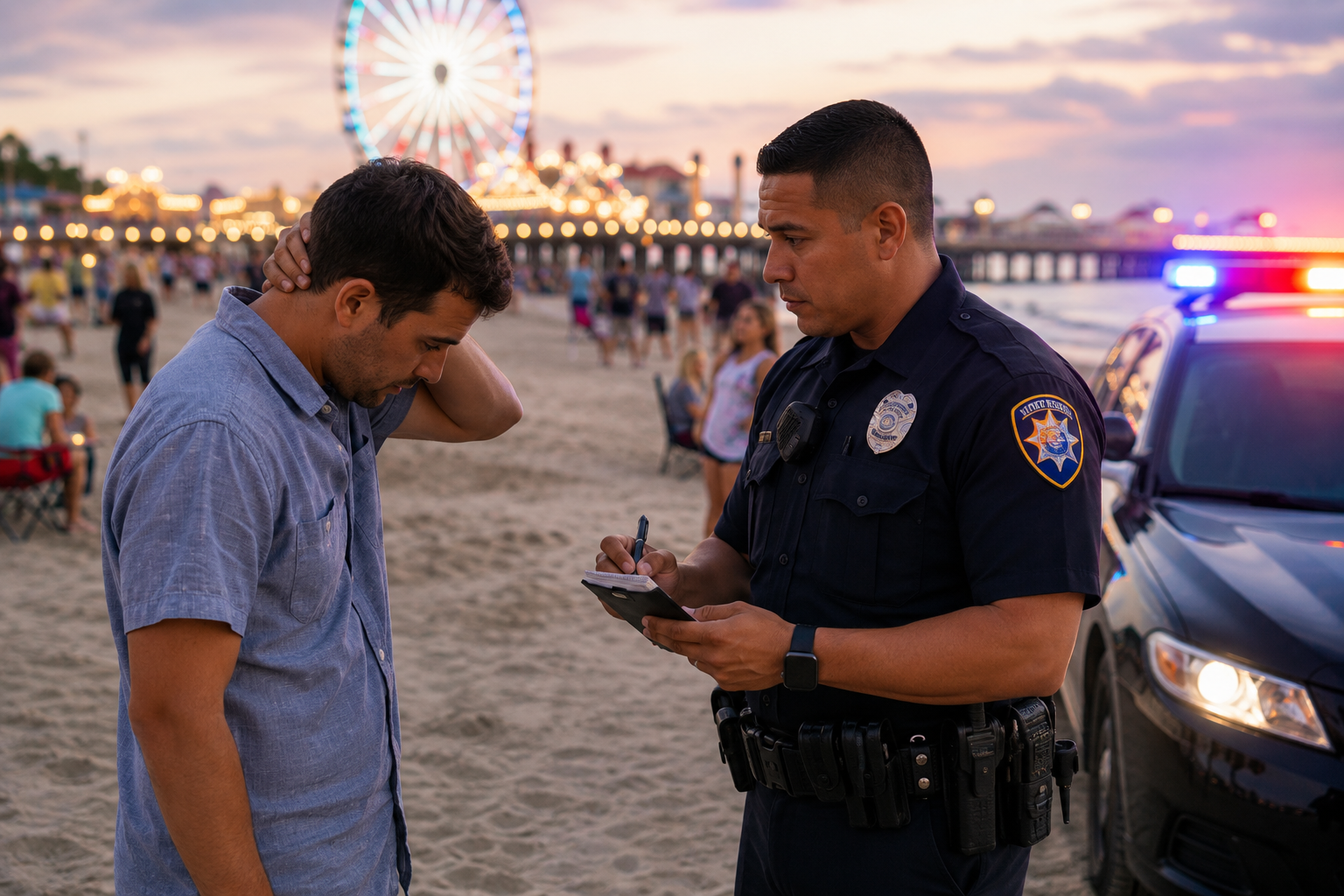
Galveston beach events can bring together large crowds, outdoor drinking, live music, rideshare traffic, parking congestion, and people moving between beaches, the Seawall, restaurants, hotels, and entertainment areas. Police officers may focus on conduct that appears likely to create a safety risk, including:
- Walking into traffic
- Falling near a roadway or seawall
- Attempting to enter deep water while impaired
- Starting confrontations
- Being unable to care for oneself
- Wandering away from friends or safe transportation
- Ignoring lawful safety instructions
The setting matters because a beach, sidewalk, parking area, street, festival space, bar, or restaurant may qualify as a public place under Texas law. You do not need to be driving to face a public intoxication accusation.
The central question is whether you appeared intoxicated to a degree that may have endangered you or another person.
What Texas Law Requires
Texas Penal Code Section 49.02 states that a person commits public intoxication when the person appears in a public place while intoxicated to the degree that the person may endanger themselves or another person. A premises licensed or permitted to sell alcohol also qualifies as a public place.
The statute focuses on possible danger, not merely alcohol consumption, loud speech, or an officer’s belief that someone has been drinking. Evidence that you smelled of alcohol, had bloodshot eyes, or admitted consuming drinks may support an officer’s observations, but those facts do not automatically prove the required danger element.
Relevant circumstances may include:
- Whether you were near moving traffic or deep water
- Whether you could walk and communicate safely
- Whether friends were present and willing to help
- Whether you had confirmed transportation
- Whether you followed lawful instructions
- Whether you threatened or confronted anyone
- Whether video shows calm behavior instead of dangerous conduct
- Whether heat, fatigue, dehydration, medication, or a medical condition affected your appearance
Public intoxication is generally classified as a Class C misdemeanor. Texas law authorizes a fine of up to $500 for a Class C misdemeanor. Jail is not part of the final punishment for that offense, although you may still be arrested, booked, held temporarily, and required to appear in court.
Your Rights During the Arrest
An arrest can be stressful, but your rights still apply.
You have the right to remain silent. You may provide basic identifying information when legally required, but you do not need to explain how much you drank, where you drank, who purchased the alcohol, or why you acted in a particular way.
You also have the right to ask for an attorney. A clear statement can protect you:
“I want to remain silent, and I want to speak with a lawyer.”
Do not physically resist, pull away, or interfere with the officer. Even when you believe the arrest is unfair, resistance can lead to added allegations and make the encounter more dangerous. The legality of the detention and arrest can be reviewed later through police reports, body-camera footage, witness accounts, dispatch records, and other evidence.
Learn more about public intoxication defense at:
https://www.galvestonjustice.com/galveston-public-intoxication-lawyers/
Learn more about broader criminal defense representation at:
https://www.galvestonjustice.com/galveston-criminal-defense-lawyers/
What Not to Do After Release
Many people harm a defensible case by trying to explain the incident too quickly.
Avoid these actions:
- Posting about the arrest on social media
- Sending detailed messages about the event
- Contacting event organizers to assign blame
- Pressuring witnesses to change or add details
- Giving law enforcement a detailed statement without legal advice
- Editing videos or adding captions that could alter their meaning
- Ignoring court paperwork
- Paying a fine before understanding the legal effect
Do not assume that paying a fine makes the case disappear. A payment may be treated as a guilty or no-contest plea, depending on the court process. Before resolving the charge, ask what the disposition will be and whether another option could better protect your record.
Do not miss the appearance date listed on your citation, bond paperwork, or release documents. A missed date may lead to a warrant or added court obligations.
Evidence That May Matter in a Beach Event Case
Crowded public events often create more evidence than you may realize. An attorney may seek:
- Body-camera and dash-camera footage
- Videos recorded by friends or bystanders
- Event security footage
- Bar, restaurant, hotel, or parking-lot surveillance
- Rideshare receipts and location history
- Photographs showing the area, barriers, lighting, or crowd conditions
- Medical records involving diabetes, injury, medication, or dehydration
- Witness statements from people who observed the encounter
- Dispatch audio
- Written incident reports
- Booking records
- Citation and bond documents
Time may affect whether this evidence remains available. Businesses may overwrite surveillance footage, and witnesses may forget details. Preserve screenshots, receipts, photographs, videos, and names as soon as possible. Save original files without editing them.
The Zendeh Del & Associates, PLLC Team








Possible Defenses to Public Intoxication
Every case depends on its facts. A defense may focus on whether the State can prove intoxication, a public place, or the required risk of danger.
No Meaningful Danger
The evidence may show that you were sitting with friends, waiting for transportation, walking away from a crowded area, or otherwise acting safely. Drinking or appearing impaired does not by itself establish that you may have endangered anyone.
Insufficient Observations
An officer may rely on brief impressions formed in a noisy, crowded setting. Video or witnesses may contradict claims about stumbling, aggression, confusion, or an inability to follow instructions.
Medical or Environmental Explanation
Heat, dehydration, exhaustion, low blood sugar, head injury, anxiety, or prescribed medication may cause symptoms that resemble intoxication. Medical evidence may provide another explanation for the observed conduct.
Unreliable or Incomplete Reporting
A police report may omit useful context, including the presence of a sober friend, a confirmed rideshare, barriers separating you from traffic, or calm behavior before the arrest. Body-camera footage may provide a fuller account.
Lack of a Lawful Basis for Detention or Arrest
The defense may examine when the encounter became a detention, what facts the officer knew at that moment, and whether the officer had a lawful basis to extend the encounter or make the arrest.
Related allegations may require separate attention.
Disorderly conduct information:
https://www.galvestonjustice.com/galveston-disorderly-conduct-lawyers/
Evading arrest information:
https://www.galvestonjustice.com/galveston-evading-arrest-lawyers/
What Happens in Court
The case may begin in a municipal or justice court, depending on which agency filed the charge and where the alleged conduct occurred. The first setting is not always a trial. It may be an arraignment, plea setting, or docket call.
Possible case paths may include:
- Dismissal when the evidence is legally insufficient
- A negotiated resolution
- A diversion or deferred-disposition option when available
- A contested hearing or trial
- A not-guilty finding
Eligibility for a particular result depends on the charge, criminal history, court policy, and facts. No attorney can guarantee dismissal or a specific outcome. Legal counsel can review the evidence, identify weaknesses, communicate with the prosecutor, and explain the consequences of each available choice.
Case Results
Can the Record Be Cleared?
A public intoxication arrest may appear in background checks even when the charge is minor. Whether the record can later be cleared depends on the final disposition and Texas law.
An expunction may be available in some cases involving dismissal, acquittal, or another qualifying outcome. Other cases may involve different record-sealing rules. You should not assume that a paid fine, deferred disposition, or dismissal automatically removes every record.
Learn more about record-clearing options at:
https://www.galvestonjustice.com/galveston-expungement-lawyers/
Practical Steps to Take Now
After release, write down what happened while the details remain fresh. Include:
- The date and time
- The exact location
- Officer names and badge numbers
- Statements made by officers or witnesses
- The names and contact information of witnesses
- Your transportation plans
- Whether anyone recorded the encounter
- Nearby businesses or cameras
- Any medical symptoms
- Court dates and deadlines
Keep all court documents together. Save digital evidence in more than one secure location. Avoid discussing the facts publicly. Speak with a lawyer before entering a plea or paying the fine.
A lawyer can evaluate whether the danger element is supported, request video, examine alternative explanations, and help you decide whether to negotiate or contest the charge.
Information about Jonathan Zendeh Del is available at:
https://www.galvestonjustice.com/attorney-jonathan-zendeh-del/
Speak With a Galveston Public Intoxication Attorney
A beach-event arrest does not define you, and it does not mean that the State can prove every required element. Zendeh Del & Associates PLLC offers a free consultation to discuss the arrest, court process, possible defenses, and record-clearing concerns.
Call (409) 215-7500.
Clickable phone link:
tel:+14092157500
Contact the Galveston office:
https://www.galvestonjustice.com/contact-us/
The office is located at 1813 61st Street, Suite 101, Galveston, Texas 77551.
This article is for informational purposes only and is not legal advice. Consult an attorney about your specific situation.

|
|

 |